
 Wishlist
Book Summary
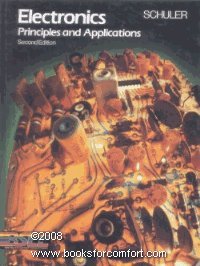
Electronics: Principles and Applications by Charles A. Schuler is a comprehensive textbook that introduces fundamental electronics concepts, from basic circuits to complex systems. It emphasizes practical applications and troubleshooting, making it ideal for students in electronics technology programs. The book balances theory with hands-on examples, preparing readers for real-world electronics work.
This book is not available
Store  |
Condition |
Deals & Coupons | Price |
Est. Shipping |
Total |
Buy |
|---|---|---|---|---|---|---|
| Sorry we could not find any result for “9780070555877” | ||||||
About Electronics, principles and applica...
Electronics: Principles and Applications is a widely used textbook that covers the core principles of electronics in a clear, accessible manner. It begins with foundational topics such as Ohm's law, series and parallel circuits, and then progresses to semiconductors, amplifiers, digital circuits, and microcontrollers. The text integrates practical applications and troubleshooting techniques throughout, helping students connect theory to real-world devices. Each chapter includes worked examples, review questions, and hands-on activities to reinforce learning. This edition has been updated to reflect current technology and industry practices. The book is suitable for introductory electronics courses at technical colleges, community colleges, and high schools, as well as for hobbyists and self-learners seeking a solid grounding in electronics.
Who should read Electronics, principles and applica...?
This book is ideal for students enrolled in electronics technology, electrical engineering technology, or related vocational programs. It also suits high school students taking introductory electronics courses, hobbyists wanting a structured learning path, and technicians seeking to refresh their knowledge. Instructors will find it a valuable resource for lesson planning and classroom activities. Self-learners with a basic understanding of algebra and physics will benefit most, as the text builds progressively from simple to complex topics.
Pros & Cons
Pros
- ✓ Clear explanations of fundamental electronics concepts
- ✓ Strong emphasis on practical applications and troubleshooting
- ✓ Includes worked examples and end-of-chapter exercises
- ✓ Updated content reflects modern technology
- ✓ Suitable for both classroom use and self-study
Cons
- ✗ Some readers may find the pace challenging without prior math background
- ✗ Limited coverage of advanced topics like RF or power electronics
- ✗ May require supplementary materials for hands-on lab work
- ✗ Not a substitute for actual lab experience
- ✗ Some sections could benefit from more detailed diagrams
Similar books


Frequently asked questions
Is this book suitable for beginners?
Yes, it starts with basic concepts and builds gradually, making it accessible for beginners with a grasp of basic algebra.
Does it include hands-on projects?
While it emphasizes practical applications, it does not include full projects; however, it provides examples and troubleshooting exercises that can be adapted for lab work.
Is the content up to date with modern electronics?
The book has been revised to include contemporary topics, but some advanced areas like IoT may require supplementary resources.
Can this be used for self-study?
Yes, the clear explanations and review questions make it suitable for self-learners, though access to components for practice is recommended.
What math background is needed?
A basic understanding of algebra is sufficient; more advanced math is introduced as needed with explanations.
At Windsorbooks, we compare prices from trusted sellers so you can buy, rent, or sell textbooks at the best total price — shipping included.
As an Amazon Associate, Windsorbooks.com may earn a small commission on qualifying purchases.