
 Wishlist
Book Summary
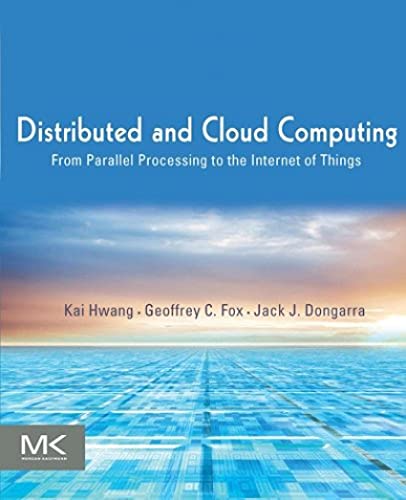
Distributed and Cloud Computing by Kai Hwang is a comprehensive textbook covering the principles, technologies, and architectures behind distributed systems and cloud computing. It explores design challenges, virtualization, resource management, and programming models, making it suitable for advanced undergraduate and graduate students in computer science and engineering.
This book is not available
Store  |
Condition |
Deals & Coupons | Price |
Est. Shipping |
Total |
Buy |
|---|---|---|---|---|---|---|
| Sorry we could not find any result for “9780123858801” | ||||||
About Distributed and Cloud Computing:...
Distributed and Cloud Computing by Kai Hwang provides a thorough exploration of the foundational concepts and emerging technologies in distributed systems and cloud computing. The book covers key topics such as system models, networking, virtualization, resource management, scheduling, and security. It also delves into cloud architectures, service models (IaaS, PaaS, SaaS), and programming models like MapReduce and Hadoop. With a blend of theory and practical examples, the text equips readers with the knowledge to design, analyze, and implement scalable distributed and cloud-based systems. It is ideal for students and professionals seeking a deep understanding of how modern computing infrastructures operate and evolve.
Who should read Distributed and Cloud Computing:...?
This book is intended for advanced undergraduate and graduate students in computer science, computer engineering, and information technology. It also serves professionals and researchers who need a solid foundation in distributed systems and cloud computing concepts. Readers should have a basic understanding of operating systems, networking, and programming. The content is particularly useful for those pursuing careers in cloud architecture, system design, or distributed application development.
Pros & Cons
Pros
- ✓ Comprehensive coverage of both distributed systems and cloud computing fundamentals
- ✓ Clear explanations of complex concepts with practical examples
- ✓ Includes up-to-date topics like virtualization, MapReduce, and Hadoop
- ✓ Well-structured chapters with exercises to reinforce learning
- ✓ Written by an expert author with extensive academic and research experience
Cons
- ✗ Some readers may find the depth of technical detail overwhelming
- ✗ Lacks hands-on tutorials or step-by-step labs for practical implementation
- ✗ Certain cloud platforms and tools may become outdated quickly
- ✗ Assumes prior knowledge of operating systems and networking
- ✗ Limited coverage of emerging edge computing and serverless architectures
Similar books


Frequently asked questions
What are the prerequisites for reading this book?
A basic understanding of operating systems, computer networks, and programming is recommended to fully grasp the concepts.
Does the book include practical exercises or case studies?
Yes, each chapter includes exercises and some real-world examples, though it is primarily theoretical.
Is this book suitable for self-study?
It can be used for self-study, but readers may benefit from supplementary online resources or courses for hands-on practice.
How current is the content regarding cloud technologies?
The book covers fundamental concepts and some modern tools like Hadoop, but fast-evolving cloud services may require additional up-to-date resources.
Is this book used in university courses?
Yes, it is commonly adopted in advanced undergraduate and graduate courses on distributed systems and cloud computing.
At Windsorbooks, we compare prices from trusted sellers so you can buy, rent, or sell textbooks at the best total price — shipping included.
As an Amazon Associate, Windsorbooks.com may earn a small commission on qualifying purchases.