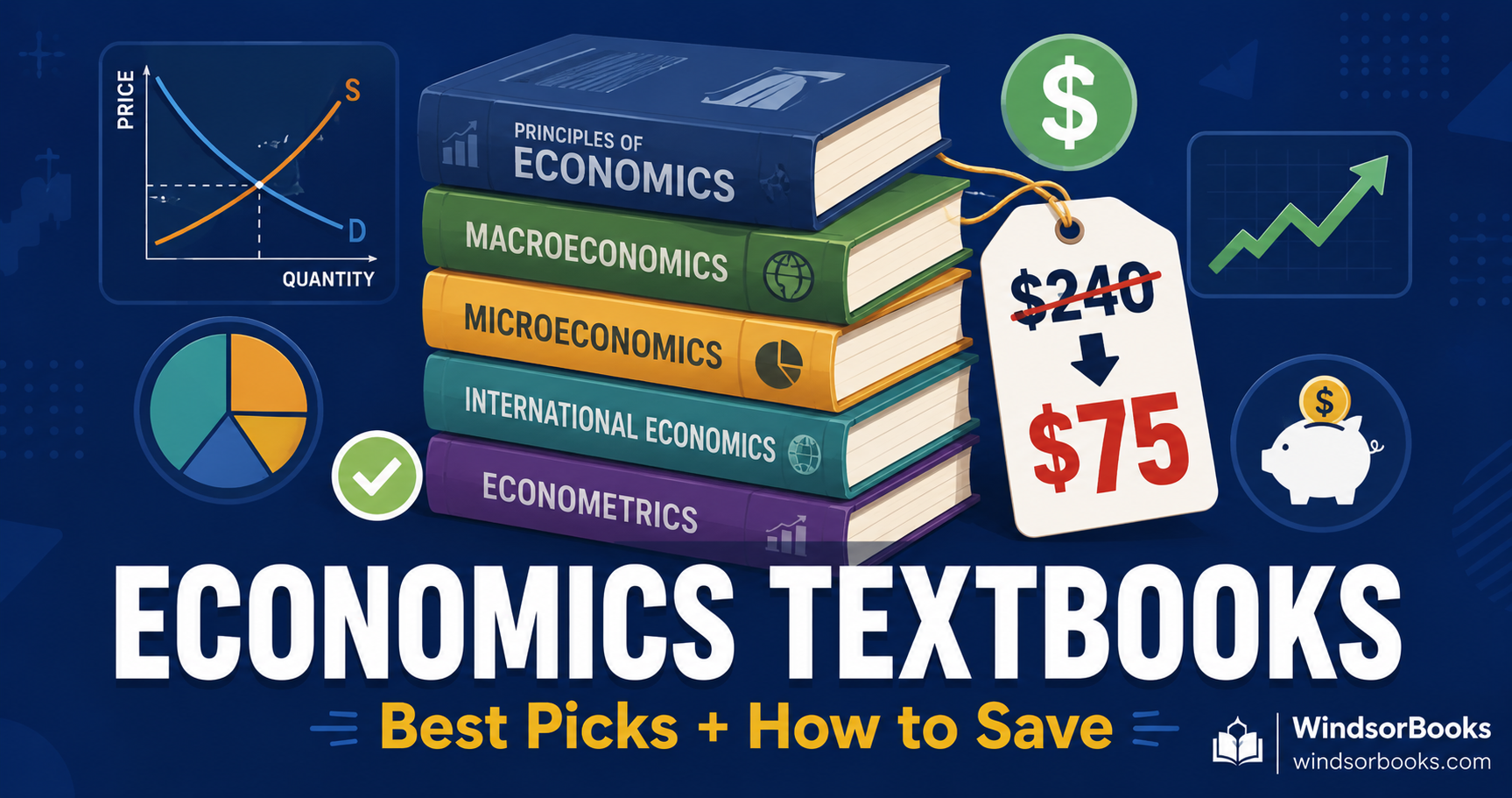
Economics is one of those subjects almost everyone has heard of, but few truly understand until they open the right textbook. Whether you're taking your first intro course or pushing into advanced macroeconomic theory, the textbook you choose shapes how well you grasp supply and demand, market structures, fiscal policy, and the forces that move the global economy.
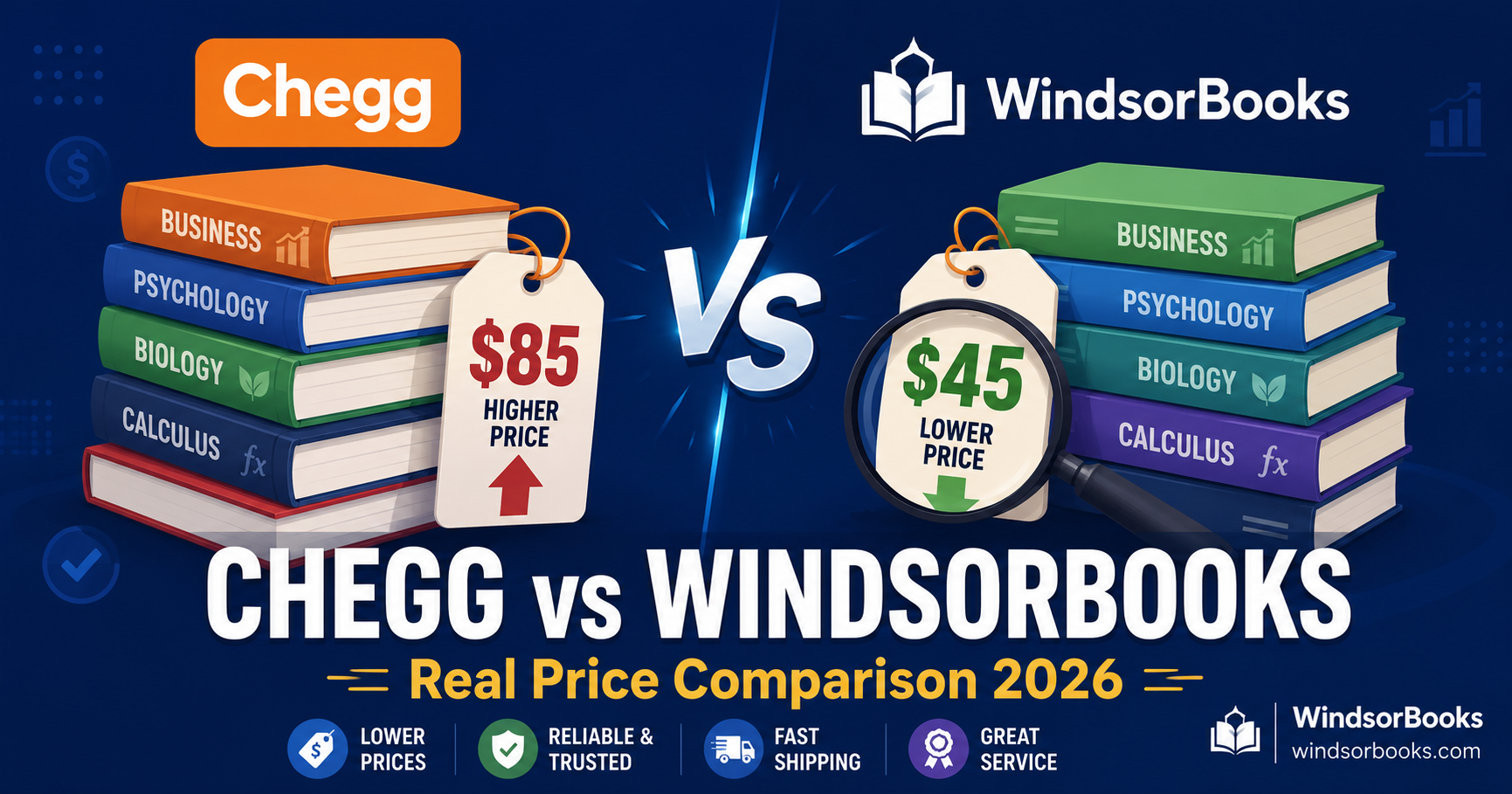
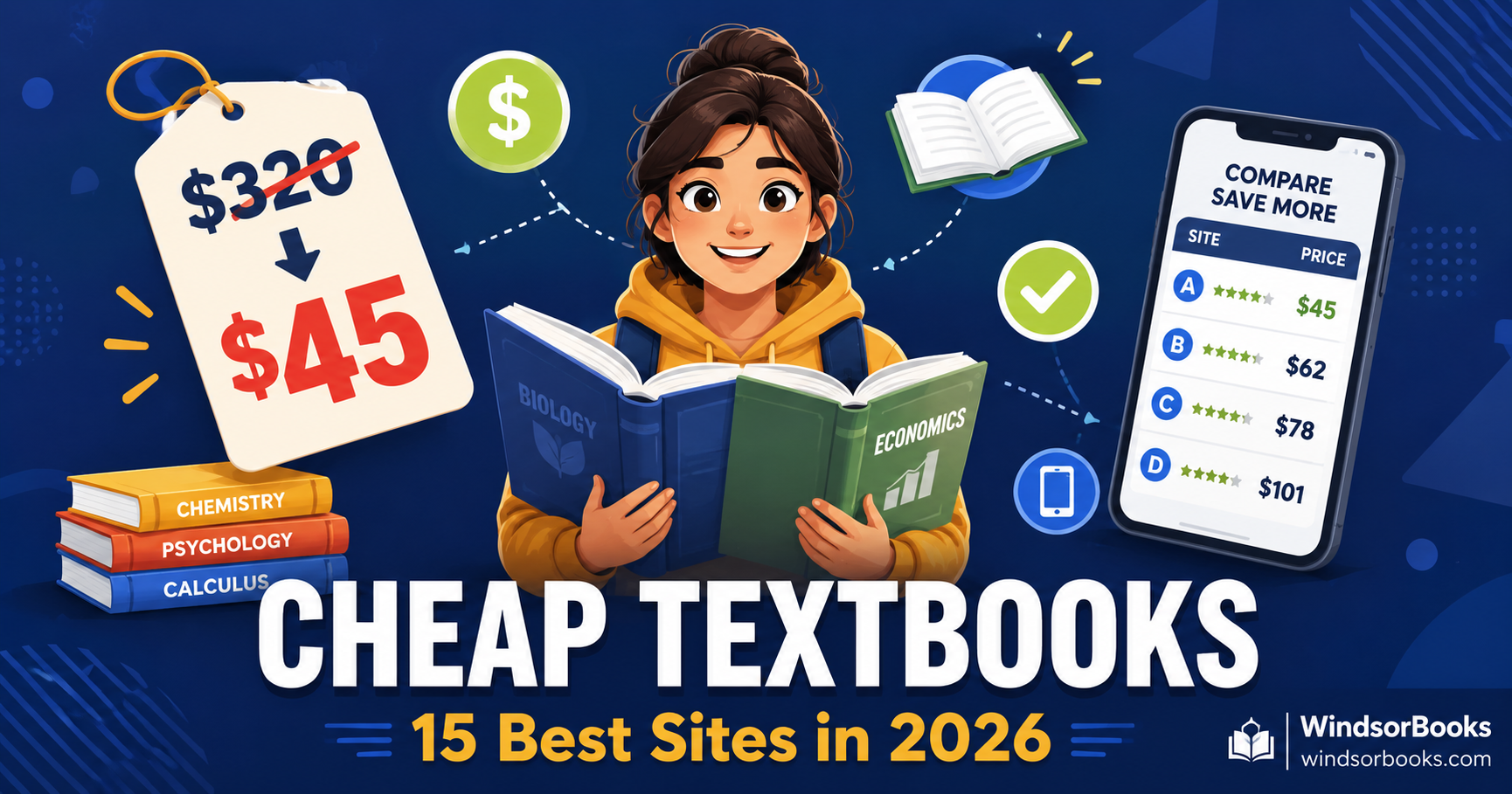
The challenge? Good economics textbooks are expensive — often $200–$300 new. The good news is you don't have to pay full price. With WindsorBooks, you can compare prices across 10+ retailers and find the same economics textbook to buy, rent, or sell for far less.
In this guide, we cover the most popular economics textbooks for college students in 2026 — what each one is best for, and how to get them at the lowest price.
What Makes a Great Economics Textbook?
Before diving into the list, it helps to know what separates a great economics textbook from a forgettable one:
- Clear explanations — complex ideas like elasticity and opportunity cost explained in plain language
- Real-world examples — current events and case studies that make theory stick
- Strong visuals — well-designed graphs and charts that clarify rather than confuse
- Practice problems — exercises that reinforce each concept
- Up-to-date editions — recent data and current economic policy examples
The best economics textbooks balance theory with application, so you don't just memorize formulas — you learn to think like an economist.
The Most Popular Economics Textbooks for College Students
1. Principles of Economics by N. Gregory Mankiw
This is the standard introductory economics textbook in American college classrooms, and for good reason. Mankiw — a Harvard professor and former chair of the Council of Economic Advisers — built the book around ten core principles of economics that form the foundation of the entire field.
It covers both microeconomics and macroeconomics: supply and demand, market structures, fiscal and monetary policy, and more. The writing is clear and beginner-friendly, with real-world examples throughout. If you're taking Econ 101, there's a strong chance this is your assigned text.
Best for: First-time economics students and anyone wanting a comprehensive foundation.
Tip: New copies run $250–$340. Compare buy, rent, and used prices on WindsorBooks — renting or buying used can save you $150+.
2. Microeconomics by David Besanko and Ronald Braeutigam
For students focusing specifically on microeconomics, Besanko and Braeutigam's text is an outstanding resource. It excels at translating abstract microeconomic models into practical, real-world scenarios — making intricate concepts genuinely understandable.
The book's strength is its step-by-step approach to topics like consumer theory, production, and market equilibrium. Students who struggle with the math-heavy nature of microeconomics often find this text the clearest.
Best for: Students who want a deep, applied understanding of microeconomics.
Tip: Check current prices on WindsorBooks before buying new.
3. Macroeconomics by N. Gregory Mankiw
Separate from his Principles text, Mankiw's intermediate Macroeconomics is a go-to for students moving beyond the basics. It covers economic growth, business cycles, unemployment, inflation, and macroeconomic policy with exceptional clarity.
It's widely praised for explaining the standard intermediate macro material — including Keynesian short-run models — without drowning students in unnecessary complexity.
Best for: Intermediate macroeconomics courses.
Tip: Intermediate editions update frequently — renting is often the smartest choice since resale value drops fast.
4. Basic Economics by Thomas Sowell
Unlike traditional textbooks, Sowell's Basic Economics uses no graphs or equations — just clear prose and historical examples to explain how economies actually work. It's a favorite for non-majors and anyone who wants to understand economic principles without the math.
At around $30, it's also far cheaper than a standard textbook, making it a popular supplement.
Best for: Non-economics majors, supplemental reading, and general readers.
Tip: Find used copies for under $15 on WindsorBooks.
5. Economics by Paul Krugman and Robin Wells
Written by Nobel laureate Paul Krugman and Robin Wells, this textbook is known for its engaging narrative style and emphasis on real-world economic issues. It covers both micro and macro and is popular for its accessible treatment of complex policy debates.
Best for: Students who want a readable, current-events-focused approach.
Tip: Compare editions on WindsorBooks — older editions cost a fraction and cover the same core material.
6. The Economics of Money, Banking and Financial Markets by Frederic Mishkin
For students studying monetary economics or financial systems, Mishkin's text is the standard. It offers rare insight into the regulation, supervision, and policy of major financial institutions — from central banks to national financial markets — always tying core principles to real-world examples.
Best for: Money and banking courses, finance-focused economics students.
Tip: Compare prices on WindsorBooks and consider renting if it's a one-semester course.
7. Essentials of Economics by N. Gregory Mankiw
A condensed version of Mankiw's Principles, the Essentials edition delivers the core micro and macro concepts in a shorter, more affordable package. It's ideal for one-semester survey courses or students who want the fundamentals without the full 800-page tome.
Best for: One-semester economics survey courses.
Tip: WindsorBooks lists Essentials of Economics from multiple sellers — compare to find the cheapest copy.
8. Freakonomics by Steven Levitt and Stephen Dubner
Not a traditional textbook, but a hugely popular supplement that demonstrates how economic thinking applies to everyday life. Many intro courses assign it alongside a core text to show students that economics is about incentives and human behavior — not just charts.
Best for: Supplemental reading that makes economics fun and relatable.
Tip: Used copies are widely available for a few dollars on WindsorBooks.
How to Save Money on Economics Textbooks
Economics textbooks are notoriously expensive — Mankiw's Principles of Economics famously sells for around $250 new. But you have options:
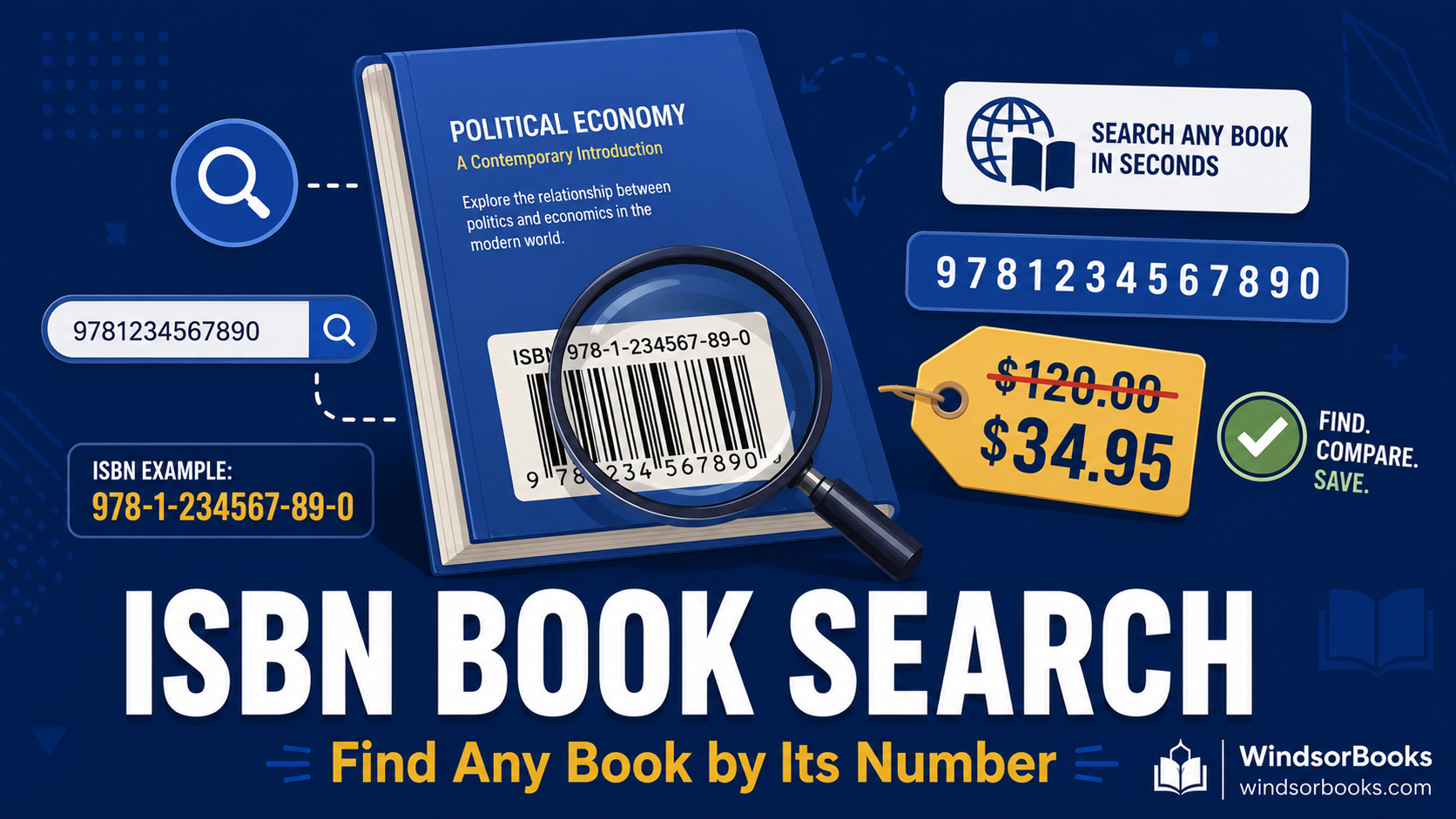
- Find the ISBN. Get the 13-digit ISBN from your syllabus to make sure you get the right edition.
- Compare all prices on WindsorBooks. Enter the ISBN and instantly see buy, rent, and used prices from 10+ sellers.
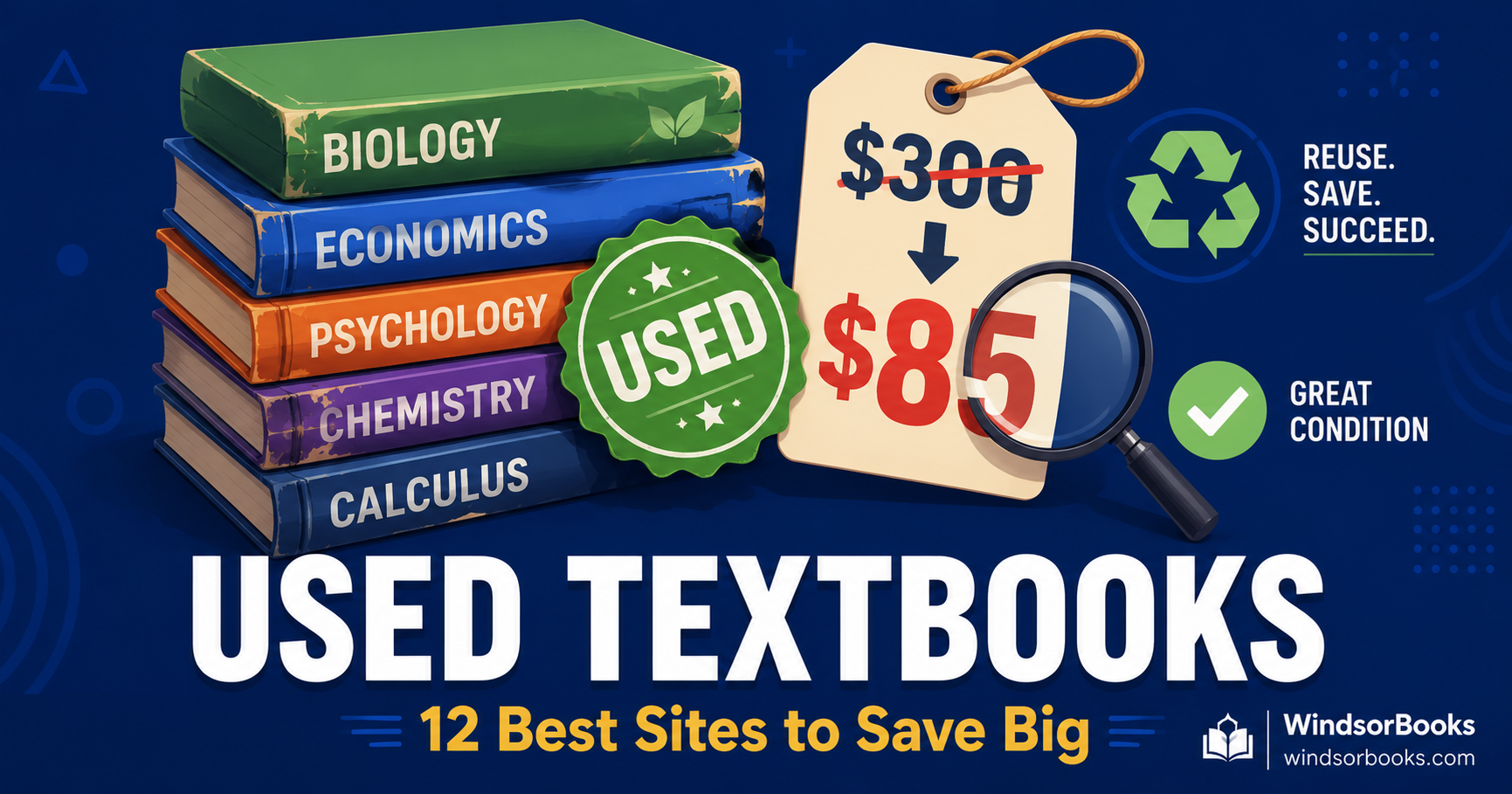
- Consider an older edition. Economics fundamentals don't change much year to year. Ask your professor if the previous edition works — it often costs 70% less.
- Rent instead of buy if you only need the book for one semester.
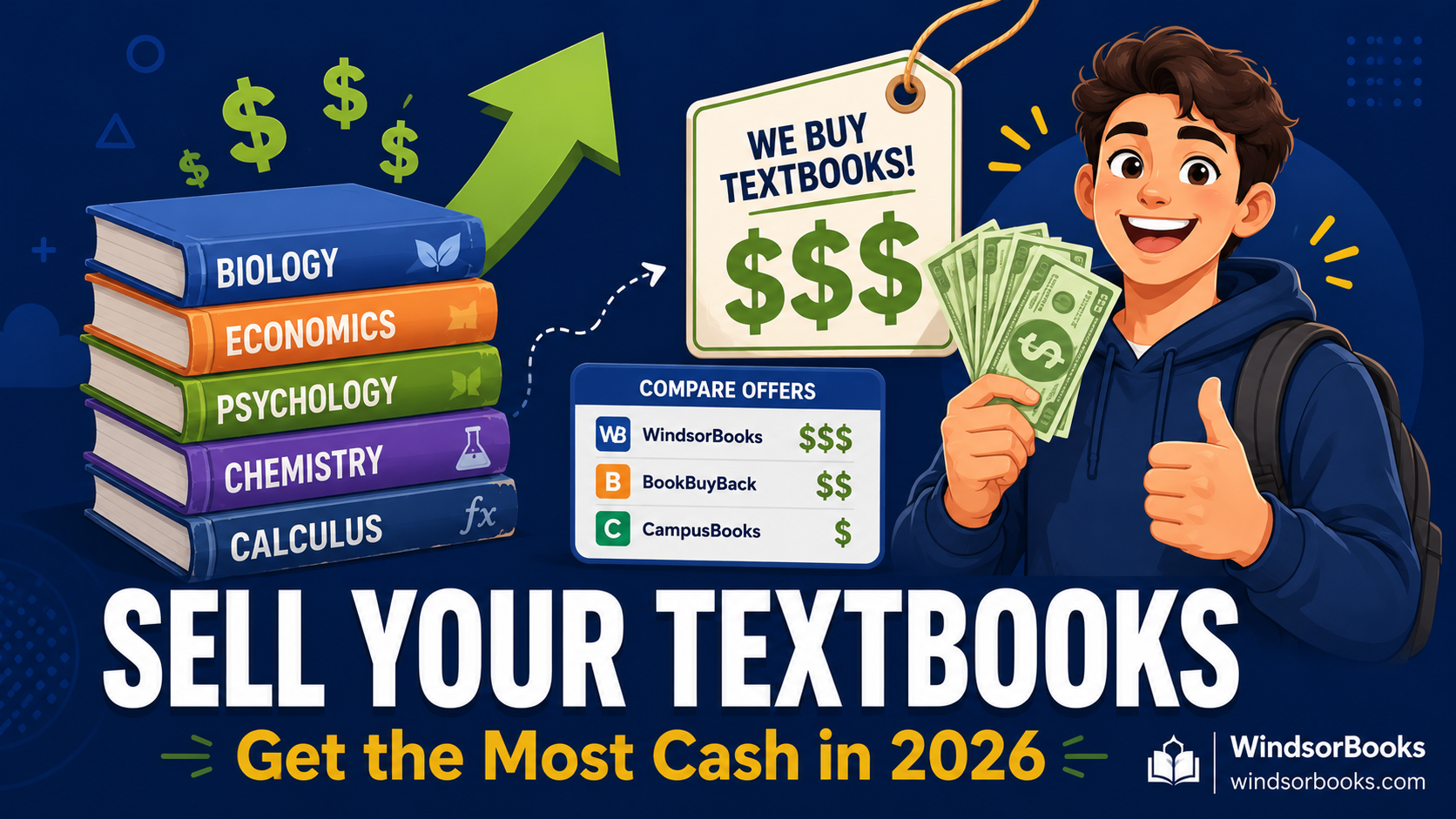
- Sell it back at semester end to recover part of your cost — compare buyback offers to get the most.
Other Popular College Textbooks Worth Comparing
Economics students often take courses across business, math, and statistics too. Here are widely-used textbooks in related fields — click any to compare prices on WindsorBooks:
- BUSN 12 — Business Textbook
- Cengage Unlimited 1-Term Instant Access (covers many economics titles)
- Cengage Unlimited Printed Access Card
- Big Ideas Math: Algebra 2 (for econ math prerequisites)
- Psychology 2e by OpenStax (common social science elective)
- The Cultural Landscape: Introduction to Human Geography
Frequently Asked Questions
What is the best economics textbook for beginners?
For first-time students, Mankiw's Principles of Economics is the most widely recommended — it's clear, comprehensive, and used in most intro courses. If you want a no-math approach, Thomas Sowell's Basic Economics is an excellent, affordable alternative. Compare prices for both on WindsorBooks.
How much do economics textbooks cost?
New economics textbooks typically run $200–$340, with Mankiw's Principles around $250. However, you can find used copies for 40–70% less, or rent for one semester at up to 80% off. Always compare options on WindsorBooks before buying.
Should I buy or rent my economics textbook?
If you're an economics major and will reference the book for years, buying used makes sense. If it's a one-semester elective, renting is usually cheaper. Compare both options on WindsorBooks to see which saves more for your specific book.
Are digital versions of economics textbooks available?
Yes — most popular economics textbooks offer digital (eTextbook) editions, often 40–60% cheaper than print. Many also come bundled with platforms like MindTap or Aplia for homework. Compare digital vs print prices on WindsorBooks.
Can I use an older edition of an economics textbook?
Often, yes. Core economics concepts (supply, demand, elasticity, market structures) rarely change between editions. The main differences are updated examples and data. Always ask your professor first — if they approve, an older edition can save you 70% or more.
Where can I sell my economics textbook after the course?
Use WindsorBooks' sell tool to compare buyback offers from multiple buyers. Economics textbooks hold decent resale value if they're a current edition — sell promptly after finals, before a new edition is released.
Find Your Economics Textbook for Less
The right economics textbook makes a tough subject click — but it shouldn't cost you a week's worth of grocery money. Whether you need Mankiw's Principles, a microeconomics deep-dive, or an affordable supplement like Basic Economics, the smartest move is the same: compare prices before you buy.
Search your economics textbook's title or ISBN on WindsorBooks. It's free, takes under a minute, and shows you every option — buy, rent, and used — from 10+ retailers, so you always pay the lowest price.
🔍 Compare economics textbook prices now — it's free →
More helpful guides from WindsorBooks: